Media
Review/activity: 2026-10-07
BFRO Report 82527: Lake Crescent Lodge dusk sighting
Publicly named witness firsthand written report, accompanied by separately attributed BFRO investigator follow-up; report is a document, not onsite audio/video.
A chronological view of newly published research, witnesses, cases, media and meaningful record updates across the Observatory.
Latest reflects when material is added or materially updated here—not necessarily when an encounter occurred.
Publicly named witness firsthand written report, accompanied by separately attributed BFRO investigator follow-up; report is a document, not onsite audio/video.
First-class recoverable media with a named direct speaker and official WEBVTT locators; Sasquatch attribution is not established, and dogman/cloaking claims remain testimony.
Episode 1212 qualifies as a first-class media record. Chris Raabis is the named interview subject, but the Pemberton visual remains secondhand to him and no public witness or case record is created from it.
In a publicly attributed written report submitted in August 2026, Terra Filmer-Larson describes a brief dusk sighting of a large, dark, upright figure moving through forest near Lake Crescent Lodge employee housing in Olympic National Park, Washington, around late August 2006.
Publicly identified as Sean and recording artist Shadowyze, the witness recounts a 2022 field-survey encounter near Chipley, Florida, in which he and a coworker briefly saw a tall indistinct figure and later a fur-covered form moving through swamp water.
Firsthand interview material documented as testimony; encounter claims remain unverified.
Firsthand interview material documented as testimony; encounter claims remain unverified.
Firsthand interview material documented as testimony; encounter claims remain unverified.
Reported August 23, 2026 nighttime visual encounter in Larue County, Kentucky after apparent knocks and a whistle response.
Reported August 19, 1966 close visual encounter near Cadiz, Kentucky while a large hair-covered figure pursued wild pigs.
Firsthand interview material documented as testimony; encounter claims remain unverified.
Firsthand interview material documented as testimony; encounter claims remain unverified.
Reported May/June 2025 Oregon visual encounter after vocalizations and other claimed activity.
Reported childhood face-to-face visual encounter in Ona, West Virginia.
Named firsthand interview; testimony documented, encounter claims unverified.
Named witness James Lady describes a mid-September 2016 southern Ohio nighttime sighting after deliberately spending several nights seeking a Sasquatch; he also reports later Michigan experiences and audio recordings.
Large weekly archive explicitly built from first-person eyewitness audio recordings; October 1 episode includes a Bigfoot segment. Mixed paranormal scope requires Sasquatch-specific evidence firewall and caller-level identity/event resolution.
Written firsthand auditory report; attribution remains unverified
Named bowhunter who submitted BFRO Report 82619 concerning two unidentified howls heard at 07:30 on 2026-09-28 at Diamond Bay, Lake Norfork, Baxter County, Arkansas.
Bigfoot Society · Matthew · direct long-form interview with public transcript added as a developing testimony record.
Open record →Developing witness record added; Utah truck incident is preserved as testimony without publishing a standalone case absent exact chronology and independent support.
Open record →Bigfoot Society · direct long-form interview added with transcript and visual-sighting locators.
Open record →Developing witness record added from a direct long-form interview; visual claims are separated from paranormal interpretation.
Open record →Sasquatch Chronicles · Jared · direct interview added; reported 2021 collision remains a documentary research hold.
Open record →Developing witness record added; multi-decade testimony retained, with the 2021 collision claim held from case publication pending documentary recovery.
Open record →Bigfoot Eyewitness Radio · Kenny Allison · source enrichment added to the existing witness and 1973 Baldwin County case.
Open record →Single episode record now presented once in Latest; it contains separate testimony from Derin Franks and Catman Hero.
Open record →How the Sasquatch Research Observatory separates repeated testimony, longitudinal consistency, later-added detail and independent corroboration.
Open record →Added to active Source Watch for mixed-topic firsthand archive mining.
Open record →UFO Chronicles Podcast · Al Santariga · 2026-09-27
Open record →Spaced Out Radio · Robert Maxwell · 2026-04-02
Open record →Cabin in the Woods · Robert Maxwell · 2026-05-22
Open record →Close Encounter Club · Robert Maxwell · 2025-08-16
Open record →The Cryptic Vault · Robert Maxwell · 2024-11-14
Open record →A summer 1974 window observation near Sunshine Acres / Davie, Florida, recounted firsthand by Al Santariga.
Open record →Named direct guest on UFO Chronicles 405; recounts a summer 1974 Sunshine Acres / Davie, Florida window observation from age 12.
Open record →An August 8, 2016 Middle Tennessee night-investigation visual account reported by the witness known publicly as Catman Hero.
Open record →Direct firsthand guest on My Bigfoot Sighting 229; reports a distinct August 8, 2016 Middle Tennessee night-investigation visual account.
Open record →A 2017 William B. Bankhead National Forest account documented in a direct interview with Derin Franks.
Open record →Named direct firsthand guest on My Bigfoot Sighting 229; the transcript begins his 2017 William B. Bankhead National Forest account at 01:15.
Open record →A longitudinally documented Vancouver Island family-retreat account reported by Robert Maxwell across multiple interview venues.
Open record →Named firsthand witness with a longitudinal source chain spanning The Cryptic Vault (2024), Close Encounter Club (2025), Cabin in the Woods (2026), and Spaced Out Radio (2026).
Open record →A July 2022 daylight road-crossing observation near Plains, Georgia, preserved in a direct Sasquatch Theory interview.
Open case record →Direct Sasquatch Theory interview; distinct July 2022 daylight road-crossing observation near Plains, Georgia.
Open witness record →A multi-source witness record spanning 2015–2026. Direct observations are separated from evidence and thermal claims.
Open case record →Multiple recoverable direct-interview/documentary sources spanning 2015–2026.
Open witness record →A November 11, 2025 long-distance observation in the Little Belt Mountains, initially interpreted as a bear.
Open case record →Direct named guest with transcript; November 11, 2025 Little Belt Mountains observation runs roughly 01:15–08:17.
Open witness record →A Southern Utah visual observation documented in a direct interview with transcript; other reported experiences are kept separate.
Open case record →Direct named guest with transcript; Southern Utah visual observation begins about 09:57 and continues through approximately 15:12.
Open witness record →A 1973 bedroom-window sighting in Baldwin County, Georgia, described by Kenny Allison in a direct interview.
Open case record →Direct named guest on Bigfoot Eyewitness Radio 556; distinct 1973 Baldwin County, Georgia bedroom-window sighting.
Open witness record →Direct firsthand Bigfoot Eyewitness Radio 554; California property sightings/experiences beginning October 2023.
Open witness media →Named direct firsthand Bigfoot Eyewitness Radio 553; first sighting at a pond in Coshocton County, Ohio.
Open witness media →Direct firsthand Bigfoot Society interview; coherent daylight cabin/deer-feeder sighting near Ellijay.
Open witness media →Named direct firsthand Bigfoot Society interview; January 2025 Ocean Shores sighting plus longer field history.
Open witness media →Named direct firsthand Bigfoot Society interview; prolonged possible visual observation near Oakridge plus field history.
Open witness media →Direct firsthand My Bigfoot Sighting 226; distinct Thanksgiving Day 1992 backyard visual observation.
Open witness media →Direct firsthand Bigfoot Society interview; family-drive visual observation near Packwood/Mount Rainier.
Open witness media →RQ-001 compares repeated accounts of the same events and separates later additions from actual contradictions.
Open witness media →A newly published Developing Record preserves the current firsthand source trail while clearly marking unresolved research.
Open witness media →A newly published Developing Record preserves the Western Massachusetts testimony as a source-linked developing record.
Open witness media →A newly published Developing Record connects the witness profile to the recovered interview series.
Open witness media →A newly published Developing Record preserves the witness testimony and claimed thermal context as distinct research objects.
Open witness media →A newly published Developing Record documents the recoverable firsthand account without treating incomplete research as established fact.
Open witness media →A newly published Developing Record adds a source-traceable witness account from the Forks area.
Open witness media →A newly published Developing Record adds the Hoh River witness account with its present source limitations disclosed.
Open witness media →A newly published Developing Record documents the accepted firsthand material while keeping broader source research separate.
Open witness media →The Observatory explains why documentable firsthand testimony can be published with limitations before every research question is resolved.
Open witness media →Six additional interviews and appearances are now available on Lankford’s profile, including playable YouTube and Spreaker sources.
Open witness media →A new Sasquatch Odyssey interview has been connected to Lankford’s profile. It adds separate 2026 claims involving an April handprint, a May 17 sighting and a September sound event; these remain later testimony and are not merged into the 2019 Highway 84 encounter.
A direct transcribed Bigfoot Eyewitness Radio interview documents this witness account.
A direct transcribed My Bigfoot Sighting interview documents this witness account.
A direct transcribed My Bigfoot Sighting interview documents this witness account.
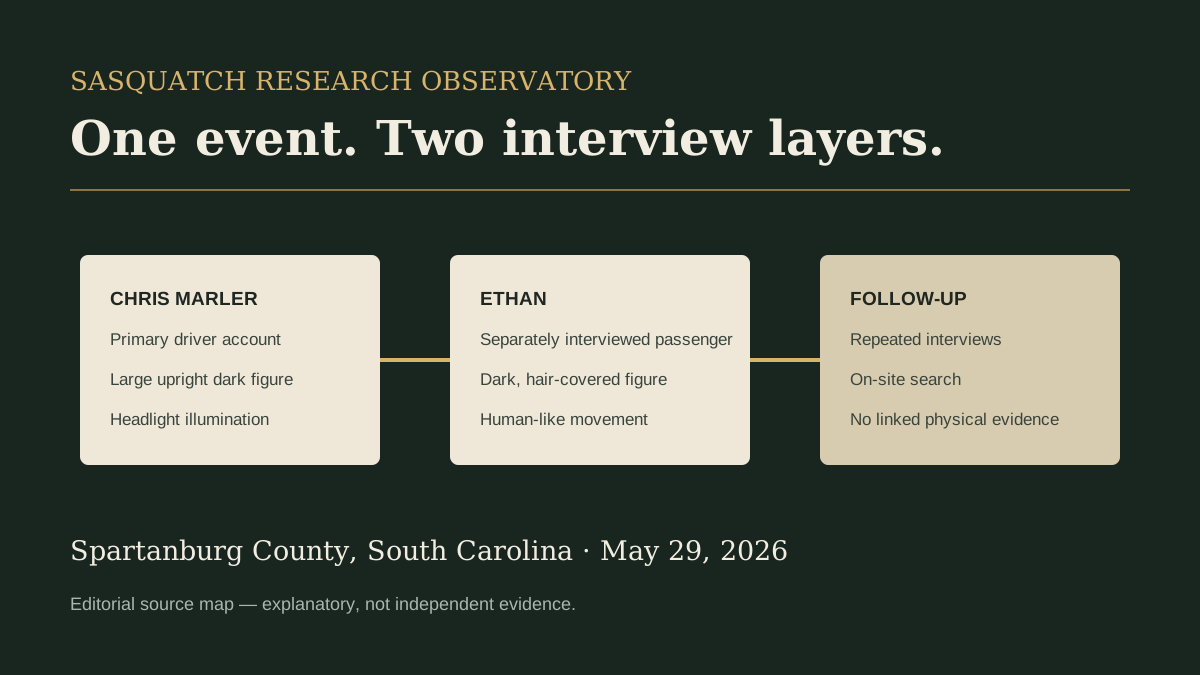
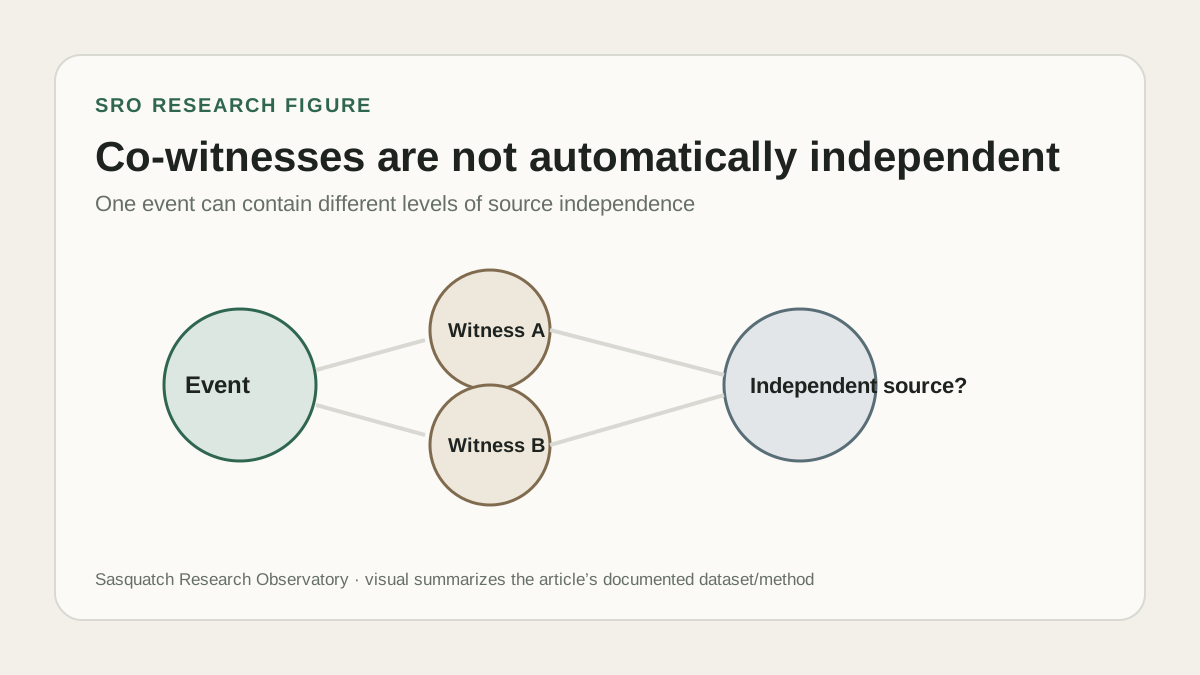
Two separately interviewed motorists, repeated consistency checks and a site follow-up are reconstructed as distinct evidence layers, with the absence of directly connected physical evidence kept explicit.
A later firsthand appearance has been connected to Lankford’s existing 2019 Texas record. New sheriff-vehicle context is preserved as an added-later detail rather than treated as corroboration.
The multi-year interview archive is now included in the Observatory source index.
The Observatory expanded the public media archive across witness and case records, connecting video, audio, documents, reports and contextual media to the records they help document.
My Bigfoot Sighting Episode 205 adds another account from Doug Messer. One detail differs from the existing record, so both versions are preserved.
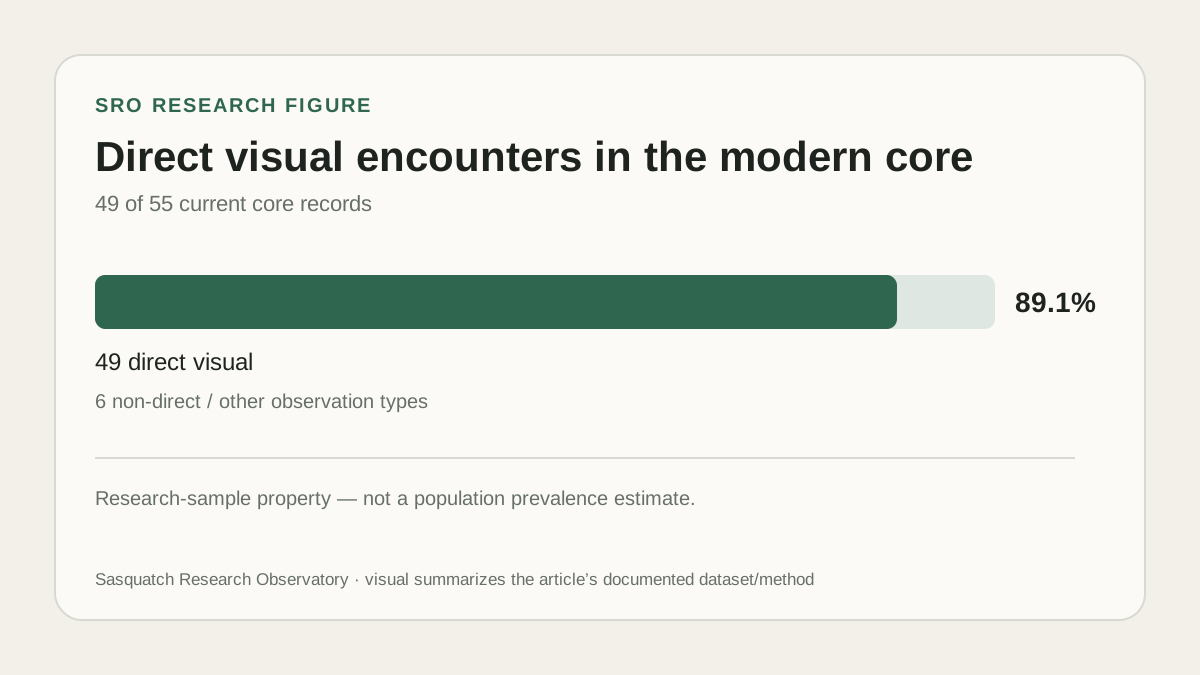
In the Observatory’s current 55-witness modern core, 49 records involve a direct visual observation. The proportion remains high after two deliberate stress tests—but it is a property of this research sample, not a population estimate.
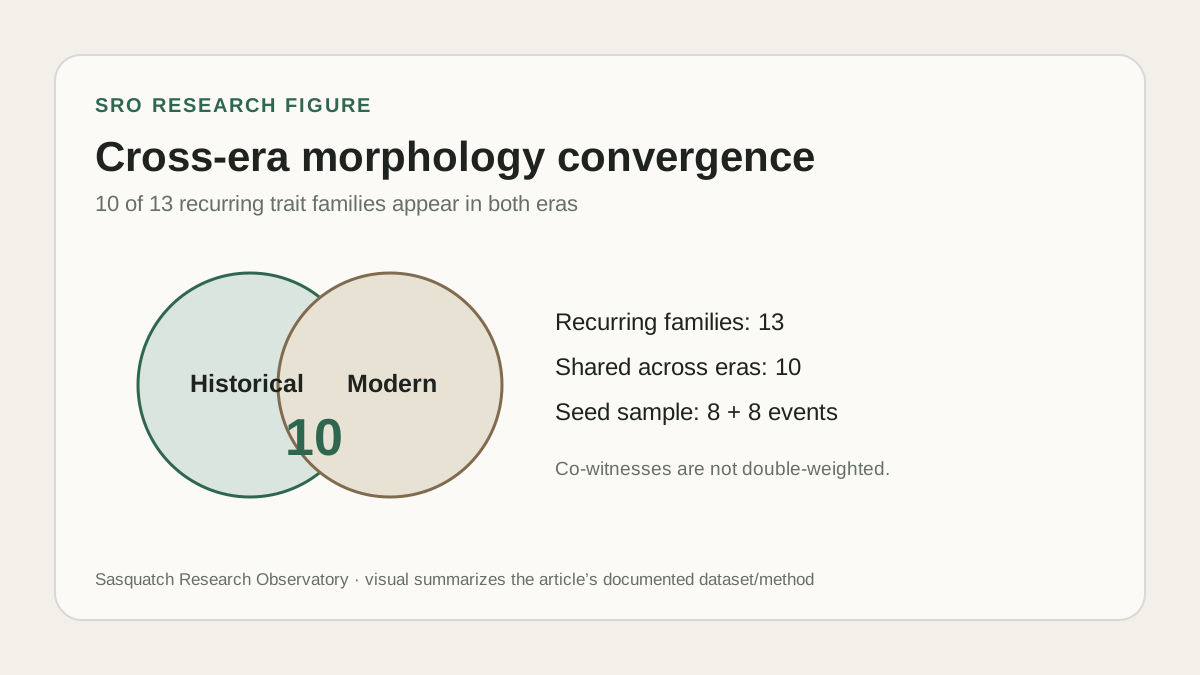
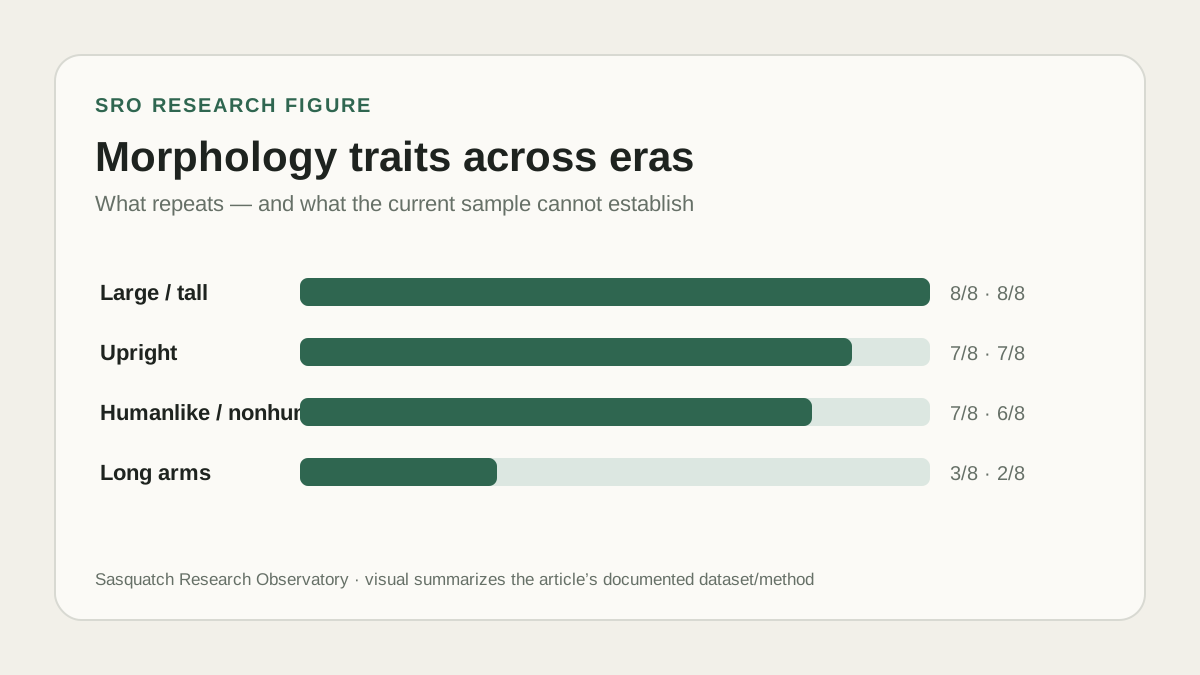
A conservative event-level comparison found 10 of 13 recurring trait families appearing in both historical and modern morphology-rich samples. It is an exploratory convergence signal, not proof of a species.
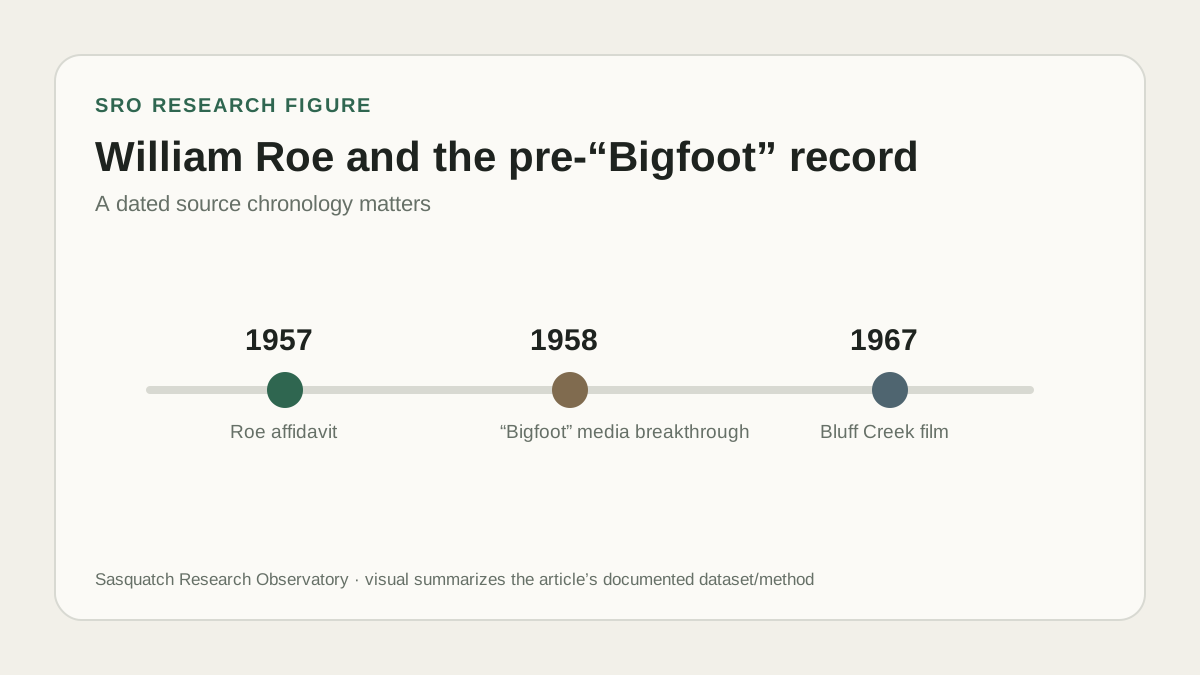
A 1957 sworn account attributed to William Roe contains several traits that later became staples of Sasquatch description—before the 1958 northern California “Bigfoot” newspaper breakthrough.
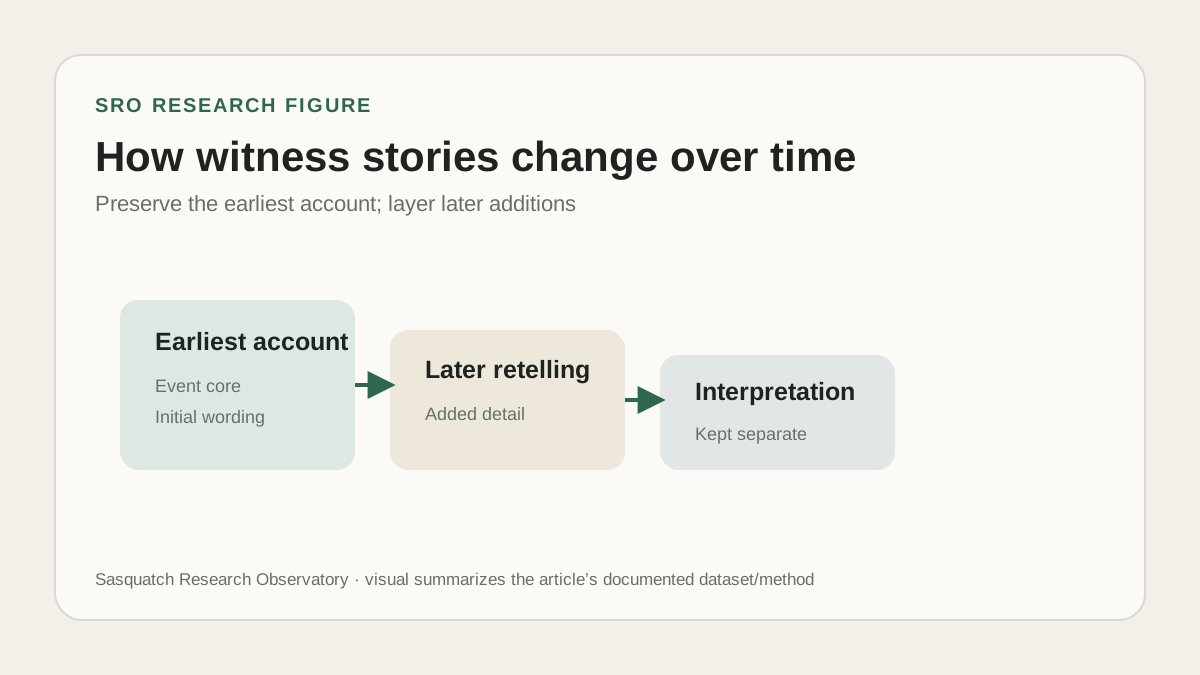
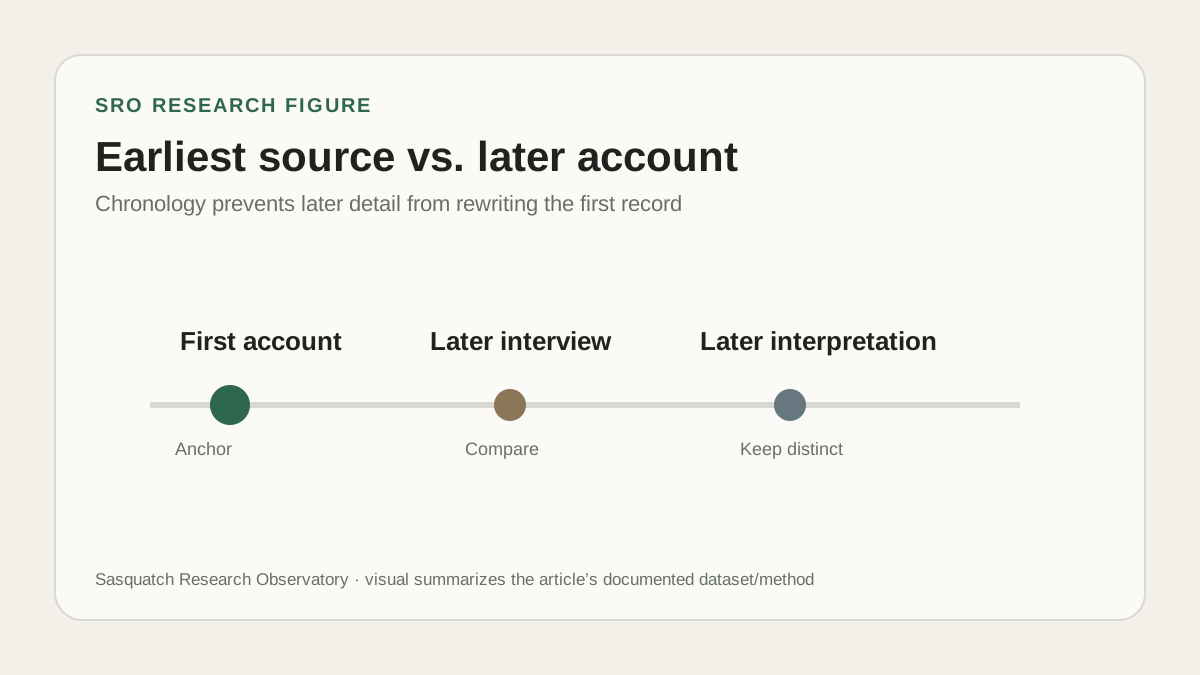
A source-history audit of ten witnesses found that a stable physical core can coexist with later-added evidence claims, interpretation and detail. That is why SRO tracks testimony as a chronology instead of flattening every retelling into one story.
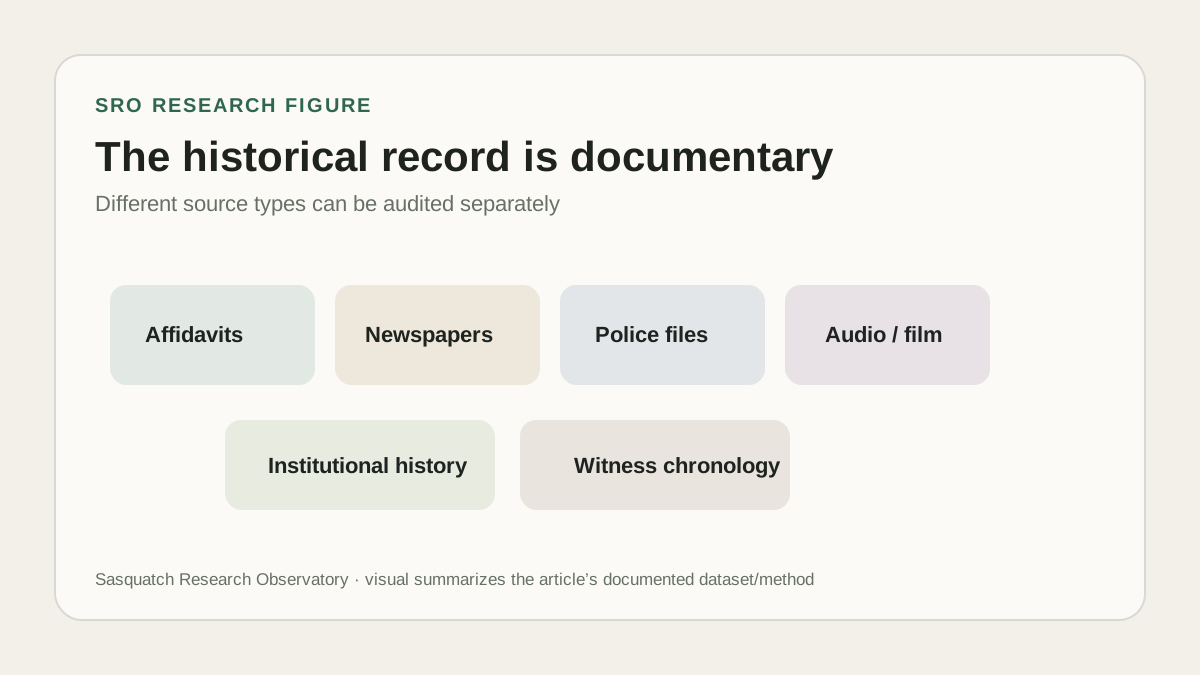
The Observatory’s historical matrix contains more than retrospective storytelling: surviving affidavits, newspapers, police files, institutional histories and audiovisual records create a documentary architecture that can be audited case by case.
A newly documented interview has been connected to Parker’s existing profile and source chronology. Later-added detail is preserved separately from the earliest-source account.
A firsthand account of a c. 1989 Florida road-crossing encounter has been added with a linked event record.
A 2006 Minnesota visual account has been added. Later paranormal/high-strangeness material remains separated from the core visual testimony.
A named daylight motorist witness from a 2019 Texas encounter has been added with multiple interview/source-chain depth.
A named close-range Minnesota visual witness has been added from a firsthand Bigfoot Crossroads interview.
An interim source-verified comparison asks which physical descriptions recur across eras—and which claims remain too weak to count.
Why the Observatory separates co-witness reporting from genuinely independent corroboration when evaluating encounter evidence.
Later interviews can add detail, interpretation and memory. Source chronology keeps the earliest public account visible.
A reader-first entry into the Patterson–Gimlin record, keeping film, chronology, competing explanations and unresolved questions distinct.
Latest surfaces meaningful public additions and updates. Minor metadata corrections, duplicate discoveries and material that has not yet been verified for publication do not create public activity entries.