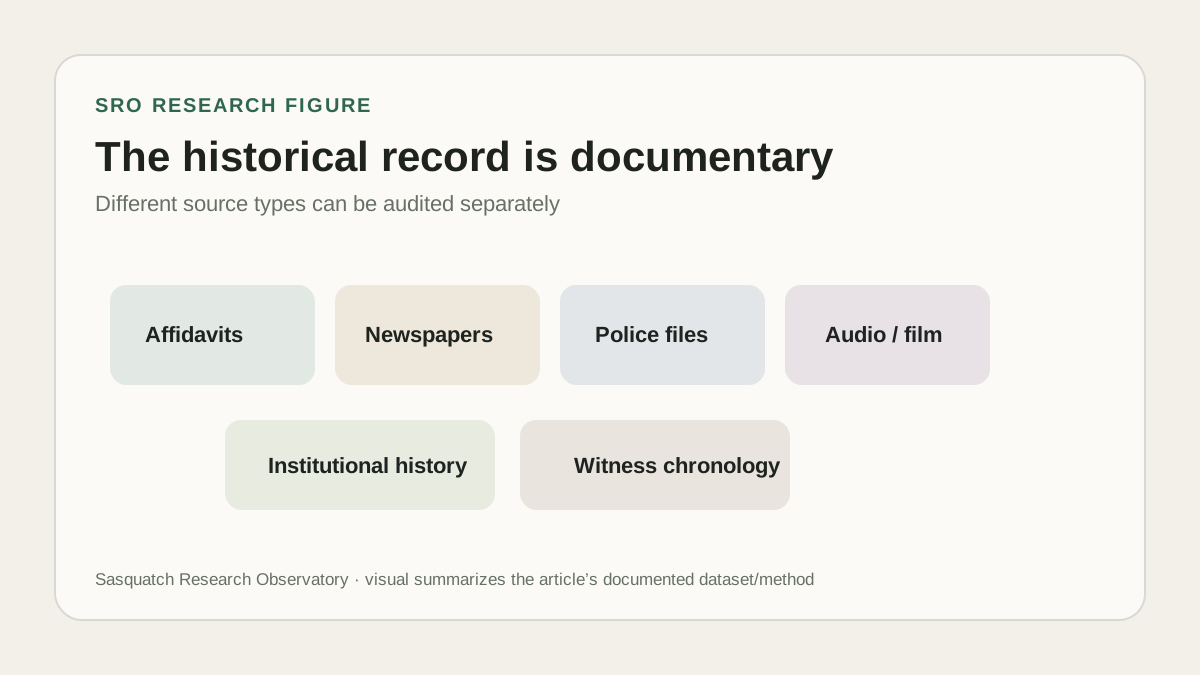
Historical Sasquatch research has a basic problem: the farther back a story goes, the easier it is for folklore, repetition and modern retelling to replace the original record. The answer is not to treat every old story as equally valuable. It is to ask what documentation actually survives.
Inspect the underlying media
These source items are tied to witness or case records cited in this publication. They are provided for inspection and remain separate from the article’s analysis.
William Roe 1957 sworn affidavit reproduction
Sasquatch Chronicles
Document scan connected to this witness record. It is presented as documentation, not as independent authentication of the reported event.
Open original source ↗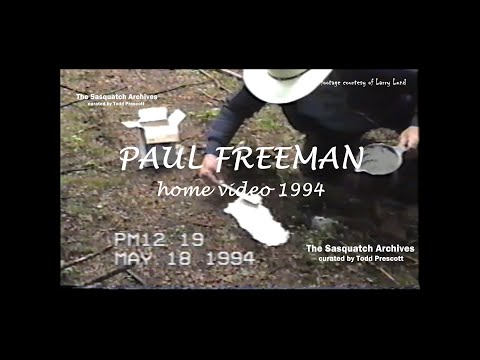
Paul Freeman Home Video (1994) Part 1
The Sasquatch Archives
Video associated with this witness record. Source access is preserved separately from evidentiary assessment.
Open original source ↗Scope of this publication
- Historical matrix: 102 witness records.
- Core: 64; candidate: 38.
- Usable coverage: every record is tiered by the recoverable source architecture available to SRO; candidate status is preserved where documentation is weaker or delayed.
- Source mix: BFRO historical reports, original municipal/police records, contemporary newspapers, state/institutional history, surviving audiovisual evidence and constrained retrospective interviews.
- Independence: multiple witnesses to one event remain separate witness entities, while shared-event documentation is not treated as independent events.
- Selection intentionally favors durable, source-recoverable cases.
- Limitation: historical survival bias favors cases that generated or retained documentation; documentary survival does not authenticate the reported creature.
- Reproducibility: Historical Matrix B-pass 102 with explicit Core/Candidate tiering and source-family fields.
The historical matrix separates core from candidate records
SRO’s current historical matrix contains 102 witness records: 64 in the historical core and 38 candidates. The distinction is intentional. Contemporary or near-contemporary documentation can support a core record; long-delayed retrospective testimony generally remains a candidate unless independent material strengthens it.
Different cases survive in different ways
William Roe is anchored by a 1957 sworn account. The Fouke record is preserved through contemporary press, named family witnesses and institutional historical treatment. Doris Harrison’s 1972 Missouri account is preserved through state-agency historical material. The 1973 Big Muddy case has something rarer: an original municipal police file naming witnesses and documenting the report. Paul Freeman’s record begins with a contemporaneous 1982 Forest Service/UPI layer and later expands into additional firsthand material and evidence claims.
Source diversity matters more than fame
The historical system therefore does not depend on one iconic film or one famous witness. BFRO archives, municipal records, state and institutional sources, surviving audiovisual material, newspapers and carefully constrained retrospective interviews play different roles. A source can document that a report existed without proving the creature was real; an institutional archive can preserve history without endorsing the claim.
What this architecture lets us do
Once historical cases are attached to dated source families, SRO can ask better questions: Which traits appear before modern Bigfoot culture? Which accounts change over time? Which co-witnesses have their own testimony? Which evidence claims are contemporaneous and which appear later? The historical archive becomes analyzable not because every case is strong, but because the provenance is explicit.
Inspect the underlying work
- Dataset: Historical Matrix B-pass 102
- Illustrative records: William Roe; Fouke/Ford family; Doris Harrison; Big Muddy/Otts Norris; Paul Freeman
- Finding status: supported description of the archive architecture
- Limitation: historical survival bias favors cases that generated or retained documentation