Body
Size & build
Frequently described as unusually tall and broad through the shoulders, with a powerful build and deep or thick torso.
The Sasquatch Research Observatory is an independent, human-directed research project built in collaboration with AI. We turn scattered witness testimony, historical records, media, evidence claims and research into a connected, source-traceable body of knowledge.
For generations, Sasquatch information has accumulated across interviews, newspapers, books, podcasts, videos, investigator archives, scientific claims and private research. Much of it remains isolated.
A witness may connect to an encounter. An encounter may connect to a location, evidence, interviews and later analysis. A historical account may share details with modern testimony. SRO preserves those relationships so the material can be examined as a research record rather than a collection of disconnected stories.
If meaningful patterns exist, organization helps make them visible. If they do not, that matters too.
Across decades and regions, independent witnesses repeatedly describe a large, upright, hair-covered figure with unusual proportions and distinctive movement. Details vary, but several characteristics recur across different eras, locations and source types.
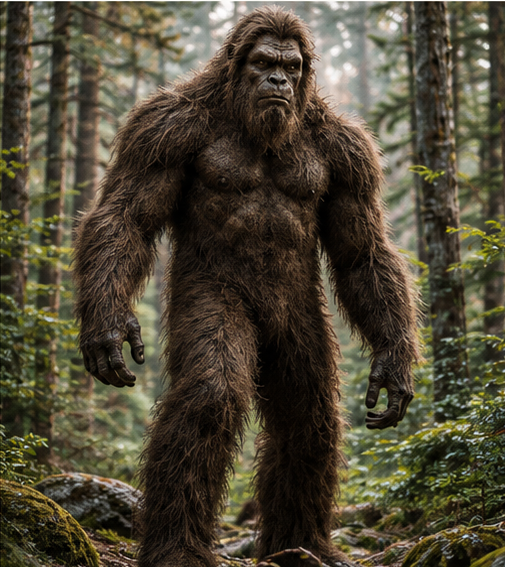
Frequently described as unusually tall and broad through the shoulders, with a powerful build and deep or thick torso.
Long arms recur in many reports, sometimes reaching near the knees, with large hands and heavy forearms.
Close-range witnesses often report a pronounced brow, deep-set eyes, a broad or flat nose and little visible neck.
Dark brown, black and reddish-brown hair are commonly reported, usually covering most of the body while leaving more of the face exposed.
Upright walking recurs in visual accounts, often with a long stride, smooth movement, low arm swing or unusual speed.
Witnesses report road crossings, rapid retreats into cover, stationary observation, tree-peeking and other brief avoidance behavior.
Preserve important witness testimony, cases, evidence claims, media and historical records with their source history intact.
Link witnesses, encounters, locations, evidence, interviews, researchers and sources instead of leaving them as isolated records.
Use structured data and AI-assisted comparison to examine recurring patterns, differences, chronology changes and unresolved questions.
Keep underlying sources visible so readers can inspect where information came from rather than simply trusting an AI-generated conclusion.
Know of a witness, encounter, interview, historical report, missing source or correction the Observatory should investigate? Help us improve the record.
Submissions enter the research intake queue. Nothing is published automatically, and every lead is reviewed under the same evidence and provenance standards as other Observatory research.
Contribute to the Research →In a publicly attributed written report submitted in August 2026, Terra Filmer-Larson describes a brief dusk sighting of a large, dark, upright figure moving through forest near Lake Crescent Lodge employee housing in Olympic National Park, Washington, around late August 2006.
Publicly identified as Sean and recording artist Shadowyze, the witness recounts a 2022 field-survey encounter near Chipley, Florida, in which he and a coworker briefly saw a tall indistinct figure and later a fur-covered form moving through swamp water.
Reported August 23, 2026 nighttime visual encounter in Larue County, Kentucky after apparent knocks and a whistle response.
Reported August 19, 1966 close visual encounter near Cadiz, Kentucky while a large hair-covered figure pursued wild pigs.
Reported May/June 2025 Oregon visual encounter after vocalizations and other claimed activity.
Reported childhood face-to-face visual encounter in Ona, West Virginia.
Named witness James Lady describes a mid-September 2016 southern Ohio nighttime sighting after deliberately spending several nights seeking a Sasquatch; he also reports later Michigan experiences and audio recordings.
Named bowhunter who submitted BFRO Report 82619 concerning two unidentified howls heard at 07:30 on 2026-09-28 at Diamond Bay, Lake Norfork, Baxter County, Arkansas.
Sasquatch Theory · James (Storm) · new direct interview record with on-site playback.
Open record →Developing witness record added; standalone case held pending stronger documentation.
Open record →Sasquatch Theory · John (New Mexico / Unit 23) · new direct interview record with on-site playback.
Open record →Developing witness record added; standalone case held pending stronger documentation.
Open record →Bigfoot Society · Matthew · new direct long-form interview record.
Open record →Developing witness record added; no standalone case published pending stronger event-level documentation.
Open record →Recovered interviews, archival recordings, films and documents are connected directly to the witnesses and cases they document. Media is contextualized rather than presented as automatic proof.

Tate Hieronymus / Bluff Creek Project
Video associated with this witness record.
Open original source ↗
The Sasquatch Archives
Audio / video associated with this witness record.
Open original source ↗Sasquatch Chronicles / archival recording
Audio associated with this witness record.
Open original source ↗SRO is built and maintained through an ongoing collaboration between its human founder and artificial intelligence. That collaboration is a feature of the project—and something we disclose openly.
Discover sources, organize records, identify relationships, compare testimony, maintain structured data, analyze patterns, prepare publications and build the public website.
The research standards, evidence rules, editorial objectives, system design and decisions about what the Observatory is trying to accomplish.
AI does not make the evidence true. AI can make mistakes, including incorrect associations or fabricated information. SRO therefore emphasizes source provenance, evidence classification, traceable records and a clear separation between documented information and interpretation.
Separate what the historical record establishes about the Patterson–Gimlin event from the claims that remain disputed.
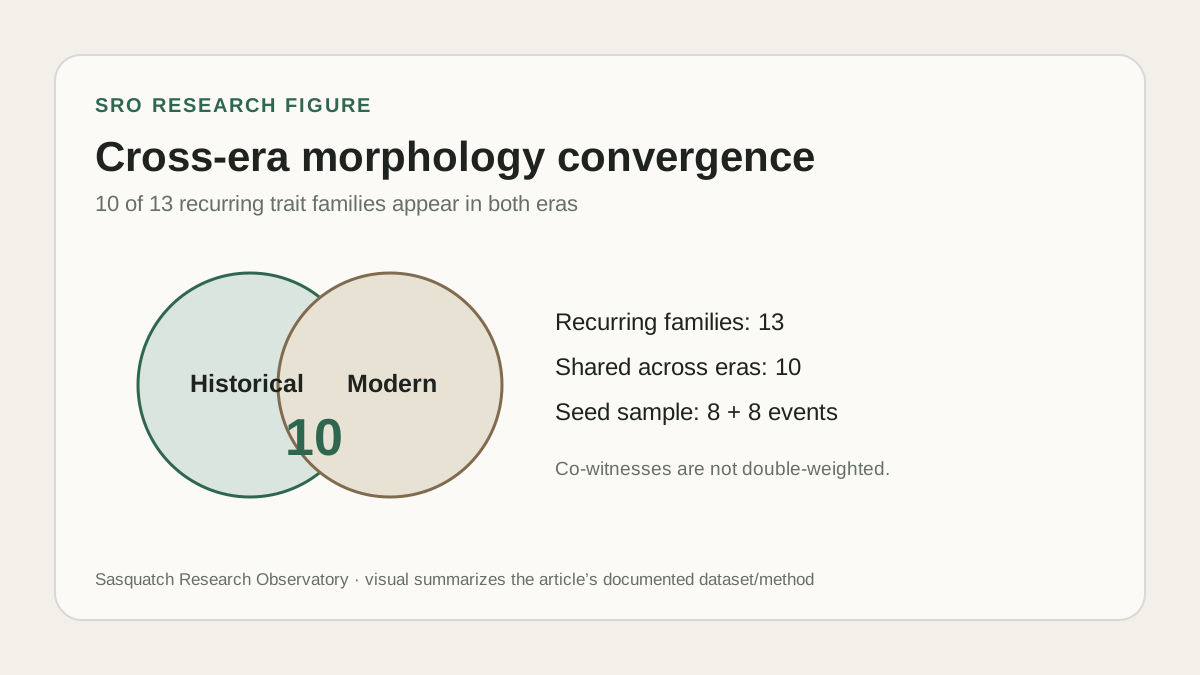
Open case →An event-level comparison tests whether specific traits recur across two very different testimony eras.
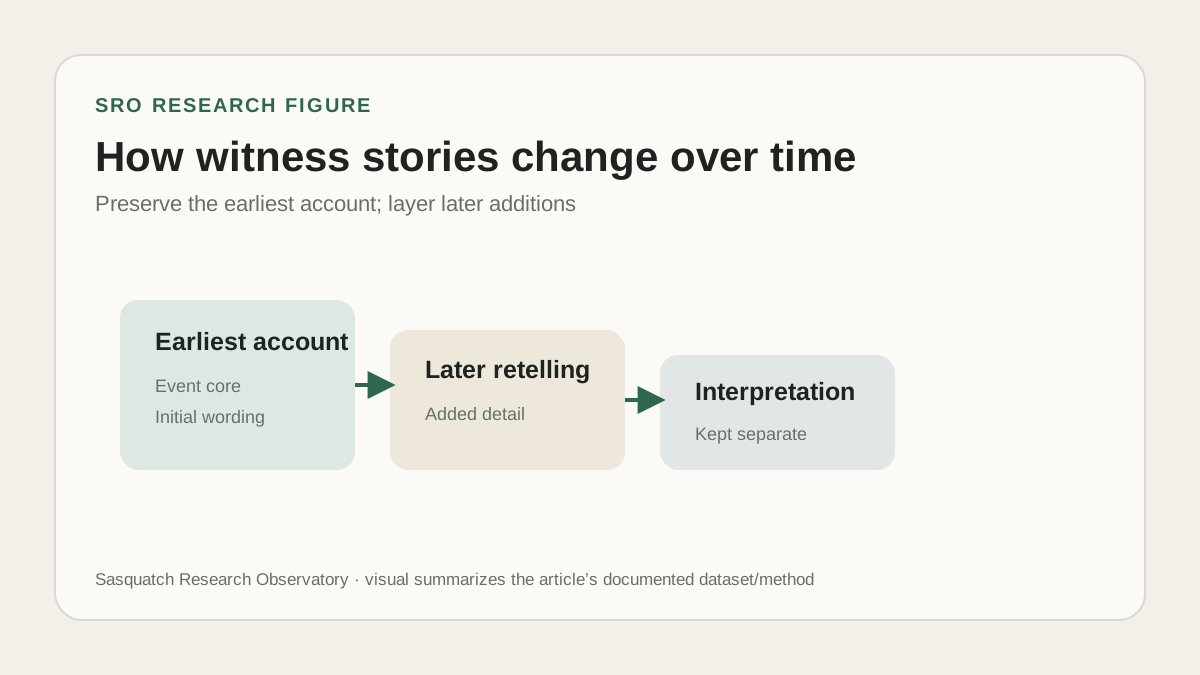
Read finding →See why the Observatory preserves earliest sources and later retellings as a chronology instead of flattening them into one account.
Read investigation →The Observatory does not begin with the assumption that Sasquatch exists—or that every report has a conventional explanation. Its purpose is to preserve the record well enough that better questions can be asked.