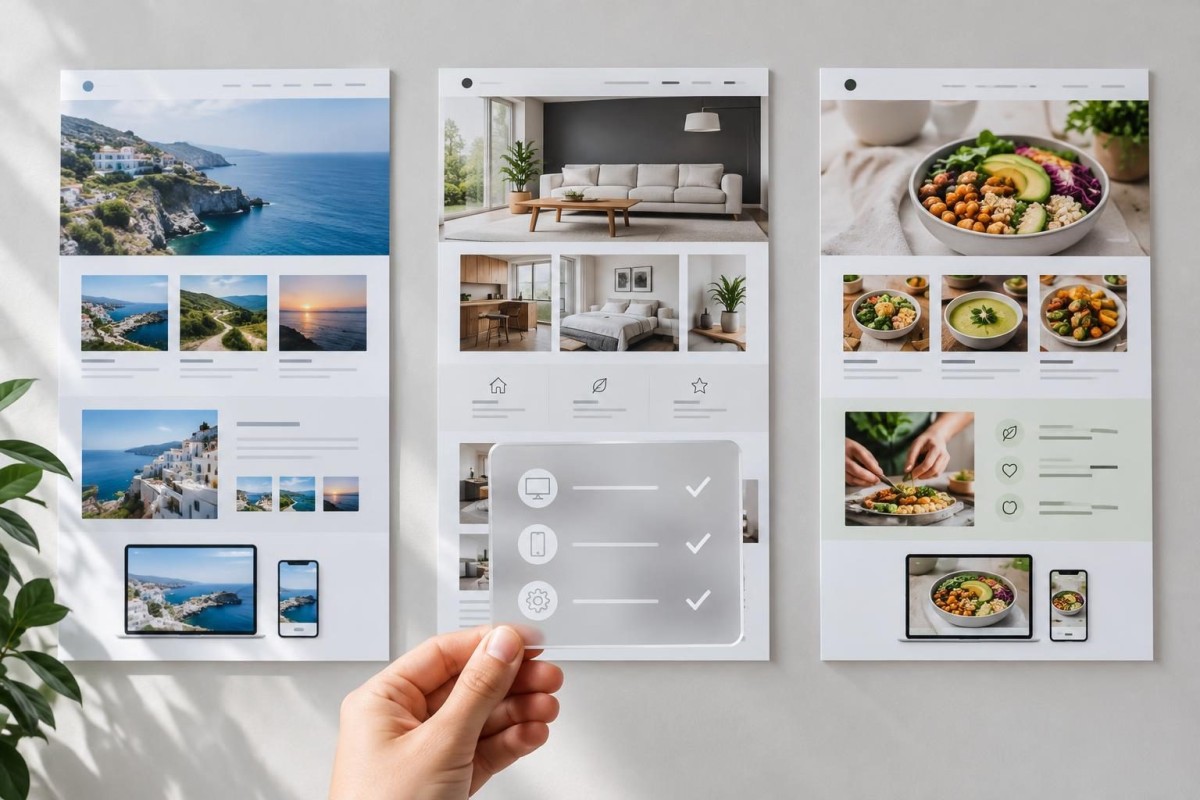
A web design portfolio is useful evidence, but it is not a guarantee that a designer can deliver the website your business needs. Before hiring, review a few relevant projects as working websites, establish what the provider actually contributed, and compare the examples against the tasks your customers must complete. The strongest portfolio is not necessarily the one with the most dramatic screenshots. It is the one that helps you ask better questions.
Start with the job your website needs to do
Write down three tasks a visitor should accomplish: understand your services, decide whether you serve their location or situation, and contact you with enough information to begin a conversation. Your list may differ. A restaurant might emphasize menus and reservations; a service business might prioritize service-area clarity and quote requests. A beautiful portfolio built around a different business model can still demonstrate skill, but it may not establish experience with your requirements.
Before browsing, define the project type, approximate page count, any forms or integrations, who will supply the content, and whether your team needs to edit the site afterward. These details make portfolio comparisons more useful than choosing the most visually appealing homepage.
Open the live websites, not just the pictures
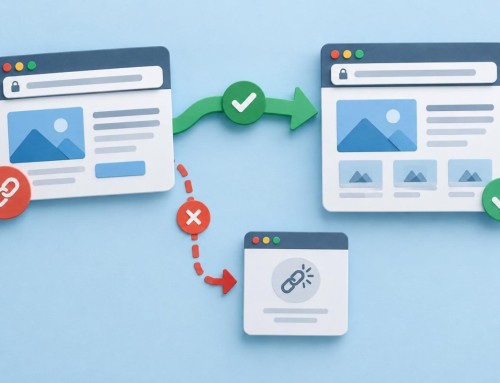
A screenshot can show typography, color, spacing and visual hierarchy. It cannot establish that a mobile menu works, that forms are accessible, or that important content remains readable on a phone. When a portfolio includes a live link, open it on both a phone and a desktop. Navigate from the homepage to a service page and then to the contact route. Look for understandable labels, visible next steps, legible text and content that answers a real buyer’s questions.
Try one simple customer journey on each site. For example: find a particular service, check whether the company works in your area, and locate the appropriate inquiry form. Do not submit a real inquiry simply to test a stranger’s form. Instead, inspect whether the form is easy to find, has sensible fields and explains what happens next. Ask the provider to demonstrate actual submission testing if that capability matters to your project.
A live site may have changed since the agency delivered it. Its current speed, content and plugins can reflect later client decisions or another vendor’s work. Treat what you see as a useful starting point, not definitive proof of who caused every strength or defect.
Ask what the designer actually delivered
Portfolio labels such as “website redesign” or “digital transformation” can hide important differences in scope. Ask whether the provider handled discovery, information architecture, visual design, WordPress development, copywriting, content migration, search setup, forms, hosting and ongoing support. It is entirely reasonable for several parties to contribute. What matters is whether the provider can clearly explain its role.
Also ask when the work was completed, whether the same people or process will be involved in your project, and whether the portfolio represents a launched website, a concept, or a partial contribution. If a project cannot be shared publicly because of confidentiality, an anonymized walkthrough or process explanation can still be useful.
Separate visible design quality from business results
Strong imagery and polished layouts demonstrate presentation choices. They do not, on their own, prove more leads, better search rankings or increased sales. If a case study claims measurable improvement, ask which metric changed, over what period, how it was measured and what other changes occurred at the same time. A before-and-after design image is not a controlled performance experiment.
Do not automatically reject a smaller provider that lacks dramatic statistics. Some clients do not grant analytics access or permission to publish results. A transparent description of what was built and how it was tested may be more credible than an unsupported percentage. Conversely, a large result claim without a source or timeframe should remain unverified.
Use a simple five-part portfolio scorecard
For each of two or three relevant projects, record a short observation in five categories. Avoid assigning a false precision to the scores; a clear “demonstrated,” “unclear,” or “not relevant” is enough.
- Problem fit: Does the example solve a customer task similar to yours, or merely share an industry?
- Live usability: Can you find information, navigate on mobile and identify a sensible next step?
- Contribution clarity: Can the provider explain exactly which deliverables it owned?
- Evidence quality: Are dates, project descriptions and any outcome claims specific and supportable?
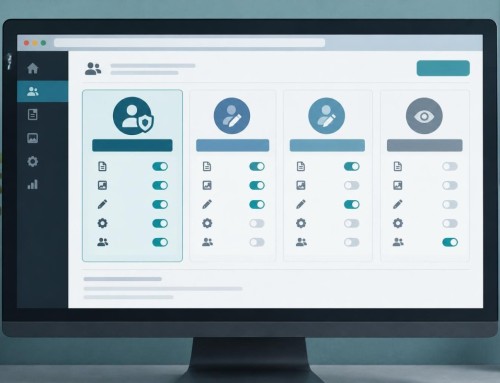
- Future control: Can the provider explain how content updates, account access, maintenance and eventual handoff work?
For example, imagine two hypothetical candidates. One shows a striking restaurant homepage but offers no explanation of its role or ongoing editing. Another shows a less dramatic service-business site, demonstrates its mobile quote flow and explains who owns the WordPress administration. For a business prioritizing reliable inquiries and staff editing, the second example may be more relevant. That does not mean it is universally better; it means the evidence matches the buying decision.
Connect the portfolio to a written proposal
A portfolio is a screening tool, not the contract. Once you identify promising work, request a scope that names the page types, content responsibilities, design revisions, mobile testing, forms and integrations, launch process, training, hosting, recurring costs and exclusions. Ask who owns the domain, content and administrative accounts, and what happens if you change providers. Make sure you understand whether premium software licenses remain usable after handoff.
For another way to assess an actual project, review Grassroots’ Ric-Man International website project and Healing Cornerstone website project. These are examples to inspect for project presentation and design decisions, not claims of independently verified commercial outcomes. You can also explore the Grassroots project portfolio for additional context.
Questions worth asking before you sign
Ask the shortlisted provider to walk through one project closest to your needs. What was the client’s original problem? Which choices were made to solve it? What did the provider deliver directly? What did the client supply? How was the site tested before launch? What would be different if the project started today? Who can edit the finished website, and how is support handled?
Notice whether the answers are specific, proportionate and open about limits. A credible provider can explain tradeoffs without promising perfect rankings, guaranteed conversions or zero future maintenance. Compare the answers with the written scope rather than relying on the confidence of a sales presentation.
Make the hiring decision with evidence you can inspect
Choose the portfolio examples that resemble your business problem, verify the live experience where possible, clarify the provider’s actual role, and then test those findings against the proposed scope and ownership terms. You do not need to become a web developer to make a more informed choice. You need a short list of real customer tasks and clear answers about what you will receive.
If you are considering a new website or redesign and want to discuss the scope before committing, request a discovery conversation with Grassroots.
Built in collaboration with ChatGPT.